

OsseoBio: Expensive Does Not Always Mean Better for Implant Materials
When selecting an implant, many patients often fall into a “price‑driven” misconception, believing that the more expensive the implant, the better it must be. In fact, as a precision medical device implanted deep into the human body, the core value of an implant lies in its mechanical properties, biocompatibility, and long‑term clinical data. Blindly pursuing a high price without considering the compatibility with one’s own bone conditions is often not a rational choice.
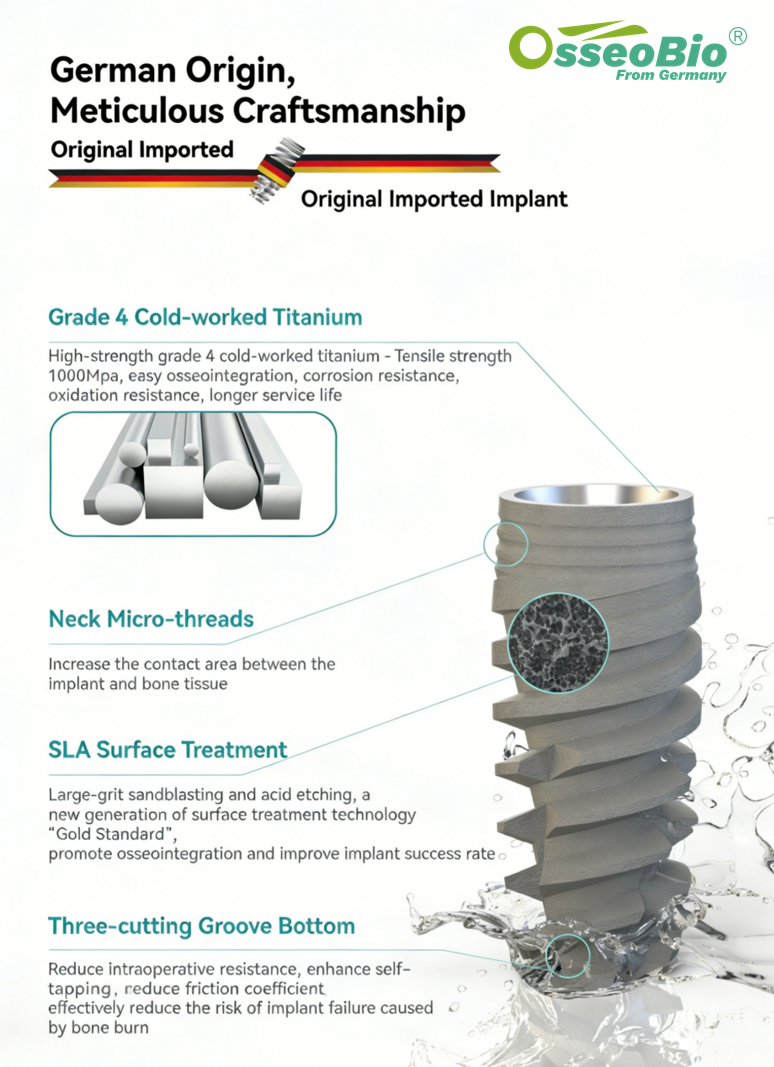
First, we need to pay attention to the “ultimate strength” of the material. During decades of use, a dental implant must withstand millions of repetitive chewing movements. Currently, mainstream implants use titanium and its alloys, but different processing techniques can lead to vast differences in strength. For example, high‑performance Grade 4 cold‑worked titanium can achieve a tensile strength of 1000 MPa, reaching the level used in aerospace applications. This high mechanical performance is essential to prevent metal fatigue and fracture when patients eat hard foods such as ribs or nuts.
Second, the biocompatibility of the material determines the quality of osseointegration. An excellent material surface can attract osteoblasts, induce them to secrete bone matrix, and ultimately achieve a strong bone‑to‑implant bond. If the material purity or surface treatment is inadequate, it may trigger an immune rejection response or even chronic aseptic inflammation. Moreover, high‑strength materials offer an additional clinical advantage: because the material itself is strong and tough, the implant can be designed thinner, thereby reducing the amount of bone removal during surgery – which is especially important for patients with thin bone.
Patients should work under the professional guidance of their dentist, choosing the most suitable solution based on their own bone volume, chewing habits, and financial capacity. OsseoBio uses Grade 4 cold‑worked titanium with a strength of 1000 MPa, ensuring structural safety even under extreme conditions while supporting minimally invasive implantation protocols. This R&D strategy, centered on quality and technology, has earned widespread acclaim in complex clinical applications.